How Loan Eligibility Is Calculated: 2026 Bank Formulas
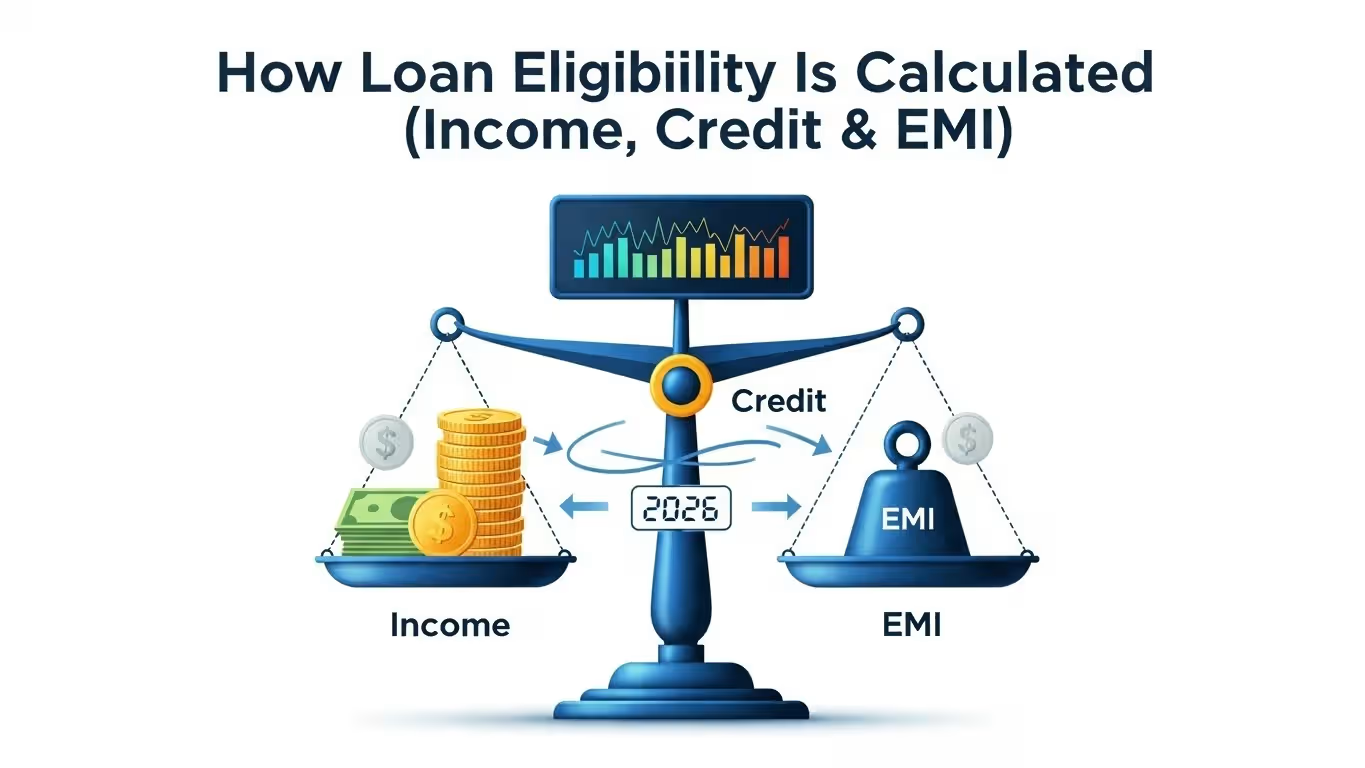
You walk into a bank, fill out an application for a $500,000 mortgage, and a week later, they tell you you're only "eligible" for $380,000. It feels personal, but it's not. Behind that rejection or counter-offer is a cold, hard mathematical framework used by almost every major lender in the USA, UK, and India.
Banks are not in the business of owning your house or car; they are in the business of collecting interest. To do that safely, they must calculate your repayment capacity with surgical precision. They need to know exactly how much "breathing room" your wallet has after the taxman, the landlord, and the grocery store take their cut.
In this guide, we'll peel back the curtain on how banks determine your borrowing power, the ratios they worship, and the simple ways you can manipulate the math in your favor.
1. The Debt-to-Income Ratio (DTI)
The DTI (or FOIR in India) is the single most important number in loan eligibility. It measures how much of your monthly income is already "spoken for" by other debts.
The Formula: (Total Monthly Debt Payments / Gross Monthly Income) x 100
USA Standards (Fannie Mae/Freddie Mac)
- Front-End DTI: Housing costs should not exceed 28% of income.
- Back-End DTI: Total debts (car, student loans, credit cards) should not exceed 36-43%.
- Some FHA loans allow up to 50% DTI in exceptional cases.
UK Standards (Affordability Stress Tests)
- Lenders typically cap loans at 4.5x your annual income.
- They "stress test" your ability to pay if interest rates rise by 3%.
- They deduct "discretionary spending" (gym memberships, streaming) from your eligible EMI.
Deep Dive Example: The $6,000 Income Trap
Assume you earn **$6,000** net per month. You have no credit card debt, but you have a **$500** car payment and **$300** in student loans.
Step 1: The Bank's 50% DTI Ceiling
Max debt capacity = $6,000 x 0.50 = **$3,000**
Step 2: Accounting for Existing "Weight"
Weight = $500 (Car) + $300 (Student Loan) = **$800**
Step 3: Calculating Residual Eligibility
Available for New Loan = $3,000 - $800 = **$2,200**
Even though you have $5,200 sitting in your bank, the lender will only let you get a loan where the monthly payment is $2,200 or less.
2. Net vs. Gross Income
Lenders in the UK and India are much stricter about using **Net Income** (Take-home pay). US lenders often start with **Gross Income** but apply lower DTI caps.
If you are self-employed, the bank doesn't look at your "revenue." They look at your **Taxable Profit** (Line 31 on Schedule C in the US). If you are writing off everything under the sun to save on taxes, you are also accidentally lowering your loan eligibility.
3. How Tenure Boosts Your Power
Most people look at the total interest of a 30-year loan and hate it. But from an *eligibility* perspective, a longer tenure is your best friend. Why?
15-Year Mortgage
Higher monthly payment. Hits your DTI ceiling faster. Results in a **lower** eligible loan amount.
30-Year Mortgage
Lower monthly payment. Stays under the DTI ceiling longer. Results in a **higher** eligible loan amount.
4. Variable Income: The Freelancer Challenge
If 100% of your income comes from a stable salary, the math is easy. But what if you rely on bonuses, commissions, or freelance contracts?
Lenders apply a "Haircut" to variable income. For example, if you earned $20,000 in commissions last year, a bank might only count $15,000 (75%) toward your eligibility calculation to protect themselves against a bad year. For freelancers, banks typically average your last 24 months of taxable income. If your income is declining year-over-year, they will often use the lower of the two years, not the average.
5. Asset-Based Lending (HNI Secrets)
For high-net-worth individuals who might not have a massive monthly "salary," banks use Asset Depletion models. They take your total liquid assets (stocks, bonds, cash), divide them by the loan term (e.g., 360 months), and add that "theoretical income" to your actual income to boost your eligibility.
| Metric | USA (Conv.) | UK (Standard) | India (PSB) |
|---|---|---|---|
| Max DTI / FOIR | 43% - 50% | Stress Tested | 50% - 60% |
| Income Multiplier | N/A (DTI based) | 4.5x - 5.5x | 60x - 72x Monthly |
| Compounding | Monthly | Annual / Monthly | Monthly / Daily |
Eligibility Power-Ups
Co-Applicants
Adding a working spouse or parent combines your DTI buckets, often doubling your eligibility.
Clear Small Debts
A $50/mo store card payment might cost you $15,000 in mortgage eligibility. Kill the small debts first.
Extended Terms
Move from a 20yr to 30yr term to lower the EMI and squeeze into the bank's DTI allowance.
Frequently Asked Questions
Will a pay rise immediately increase my eligibility?
I have a high credit score but low eligibility. Why?
Calculate Your Power
Don't fly blind. Use our Loan Eligibility Calculator to estimate your borrowing power using bank-standard formulas.