SIP vs. FD: Which Investment Option Is Better in 2026?
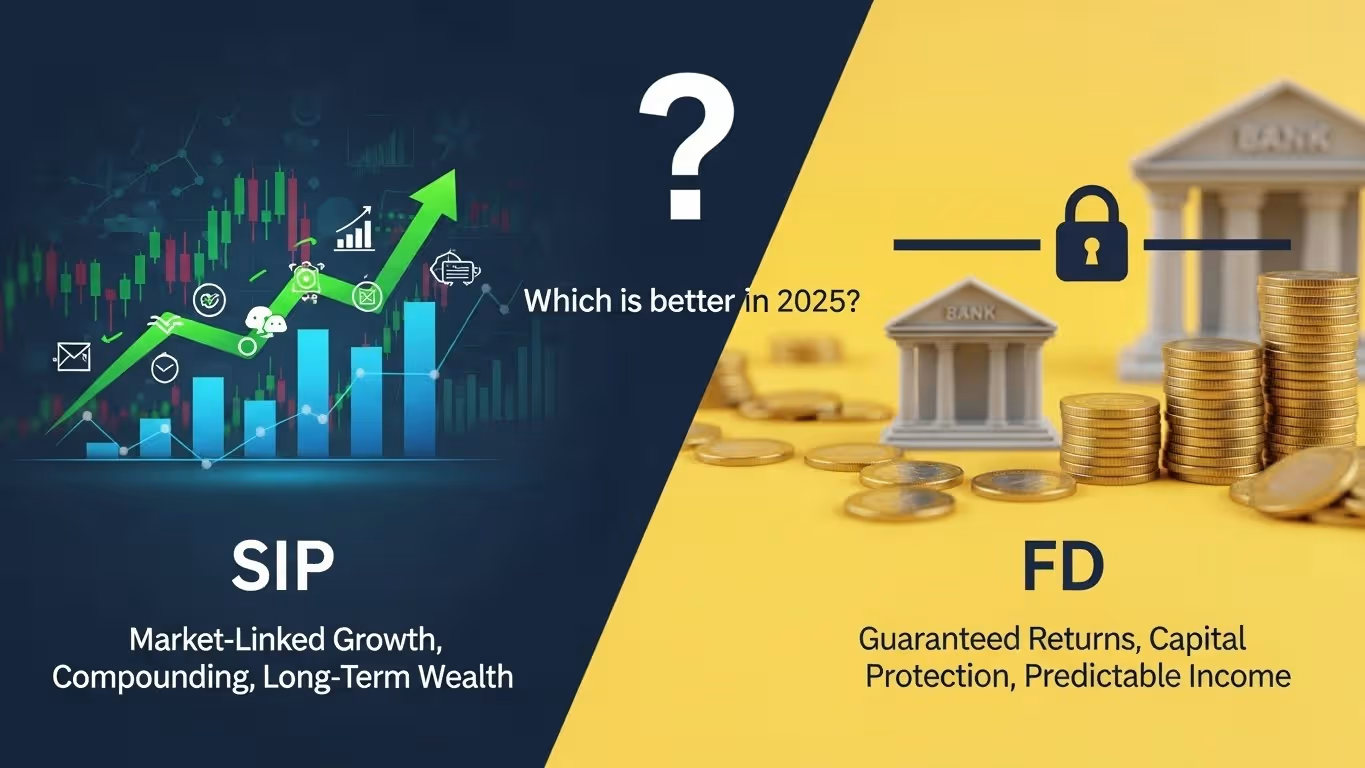
Every investor faces a fundamental choice: Growth or Stability? On one hand, you have the safety of a Fixed Deposit (FD) — the bedrock of conservative finance. On the other, the Systematic Investment Plan (SIP) — a gateway to wealth creation through stock market compounding.
In 2026, with inflation hovering around 3.5-4% in the USA and UK, and higher in developing markets, simply "saving" is no longer enough. You need your money to work harder than the silent thief that is inflation. But which one is right for you? Should you lock your cash in a vault, or ride the waves of the market?
This comprehensive guide dissects the math, the risks, and the tax implications of both SIPs and FDs across the USA, UK, and India, helping you decide exactly where to put your next $1,000.
The Fundamentals: SIP vs. FD
Before we dive into the numbers, let's clarify what we're actually comparing. Depending on where you live, these terms might go by different names:
- The Fixed Deposit (FD): Known as a Certificate of Deposit (CD) in the USA or Fixed Rate Bonds/Savings in the UK. This is a lump-sum deposit where you lend money to a bank for a set period (1 month to 10 years) at a guaranteed interest rate.
- The Systematic Investment Plan (SIP): Known as Dollar Cost Averaging (DCA) in the US or Regular Savings Plan in the UK. Instead of a lump sum, you invest a fixed amount every month into mutual funds or ETFs (Exchange Traded Funds).
The Math: Why Compounding Wins
The core difference between these two isn't just risk — it's how they grow. FDs typically offer simple or quarterly compounding. SIPs, because they are invested in productive assets (stocks/companies), benefit from market growth + reinvested dividends.
| Investment Duration | FD (at 6.5%) | SIP (at 12%) | The "Gap" |
|---|---|---|---|
| $500 Monthly for 5 Years | $35,300 | $41,200 | +$5,900 |
| $500 Monthly for 10 Years | $83,900 | $116,100 | +$32,200 |
| $500 Monthly for 20 Years | $238,500 | $499,600 | +$261,100 |
Calculations assume monthly compounding for FD and annual average returns for SIP. Market returns are not guaranteed.
Taxation: The "Hidden" Cost
You don't keep what you earn; you keep what's left after taxes. This is where FDs often lose the battle.
In the USA
Fixed Deposits (CDs): Interest earned is taxed as Ordinary Income. If you are in the 24% tax bracket, you lose nearly a quarter of your gains every year to the IRS.
SIPs: If you hold for more than 1 year, your gains are taxed at Long-Term Capital Gains rates (usually 0%, 15%, or 20%), which is significantly lower for most middle-class investors.
In the UK
Fixed Deposits: You have a "Personal Savings Allowance" (£1,000 for basic rate taxpayers), but interest above that is taxed at your income tax rate.
SIPs: Most UK investors use a Stocks & Shares ISA. Within an ISA, all gains and dividends from your SIP are 100% Tax-Free, forever.
In India
Fixed Deposits: Interest is added to your income and taxed at your slab rate (up to 30% + cess).
SIPs: Long-term gains (>1 year) are taxed at 12.5% on gains above ₹1.25 Lakh (as per 2024-25 rules), making mutual funds much more tax-efficient than FDs for high earners.
Safety First: What Happens if a Bank or Market Crashes?
FD Security
FDs are "insured." In the USA, the **FDIC** protects you up to $250,000 per bank. In the UK, the **FSCS** covers up to £85,000. In India, the **DICGC** covers up to ₹5 Lakh. This makes FDs the safest place for your emergency fund.
SIP Risk
SIPs have no guarantee. Market downturns (like 2008 or 2020) can slash your portfolio by 30-50% in weeks. However, because you are investing *monthly*, you buy more units when prices are low—this is "rupee/dollar cost averaging," which lowers your average cost.
5 Expert Tips to Balance Your Portfolio
The "100-Age" Rule
Subtract your age from 100. That's the percentage of your savings that should be in SIPs/Equity. The rest should be in safer FDs/Debt.
Emergency Fund = FD
Keep 6 months of living expenses in an FD. It's not for growth; it's for survival. Never SIP your emergency fund.
Long Term = SIP
For goals more than 7 years away (retirement, child's university), SIP is almost always better than FD because of the power of compounding.
Don't Timing the Market
SIP works because it automates your discipline. Don't stop your SIP when the market is red — that is actually the best time to buy.
Review Annually
Rebalance your folder once a year. If your stocks grew too much, move some profit to an FD to lock it in.
Frequently Asked Questions
Is SIP safer than FD?
What is the minimum amount to start a SIP?
Can I withdraw SIP money anytime?
Are FD returns guaranteed for life?
Start Planning Your Wealth
Stop wondering about the math. Use our interactive calculators to see exactly how much your money will grow over time.